Human Foods Cavalier King Charles Spaniels Should Never Eat
General nutrition information compiled from product labels and published sources, not veterinary advice. Your veterinarian is the right person to choose a diet for your dog, especially one with a health condition.
Cavalier King Charles Spaniels are small, eager eaters, and a dropped snack can be gone in a second. This page covers the human foods the ASPCA Animal Poison Control Center lists as dangerous to dogs, plus a few that are risky for other reasons. It also covers snacks that are usually fine and what to do in an emergency. It gives no doses, because a veterinarian or poison control must judge each case.
The Basics
What human foods can't dogs eat?
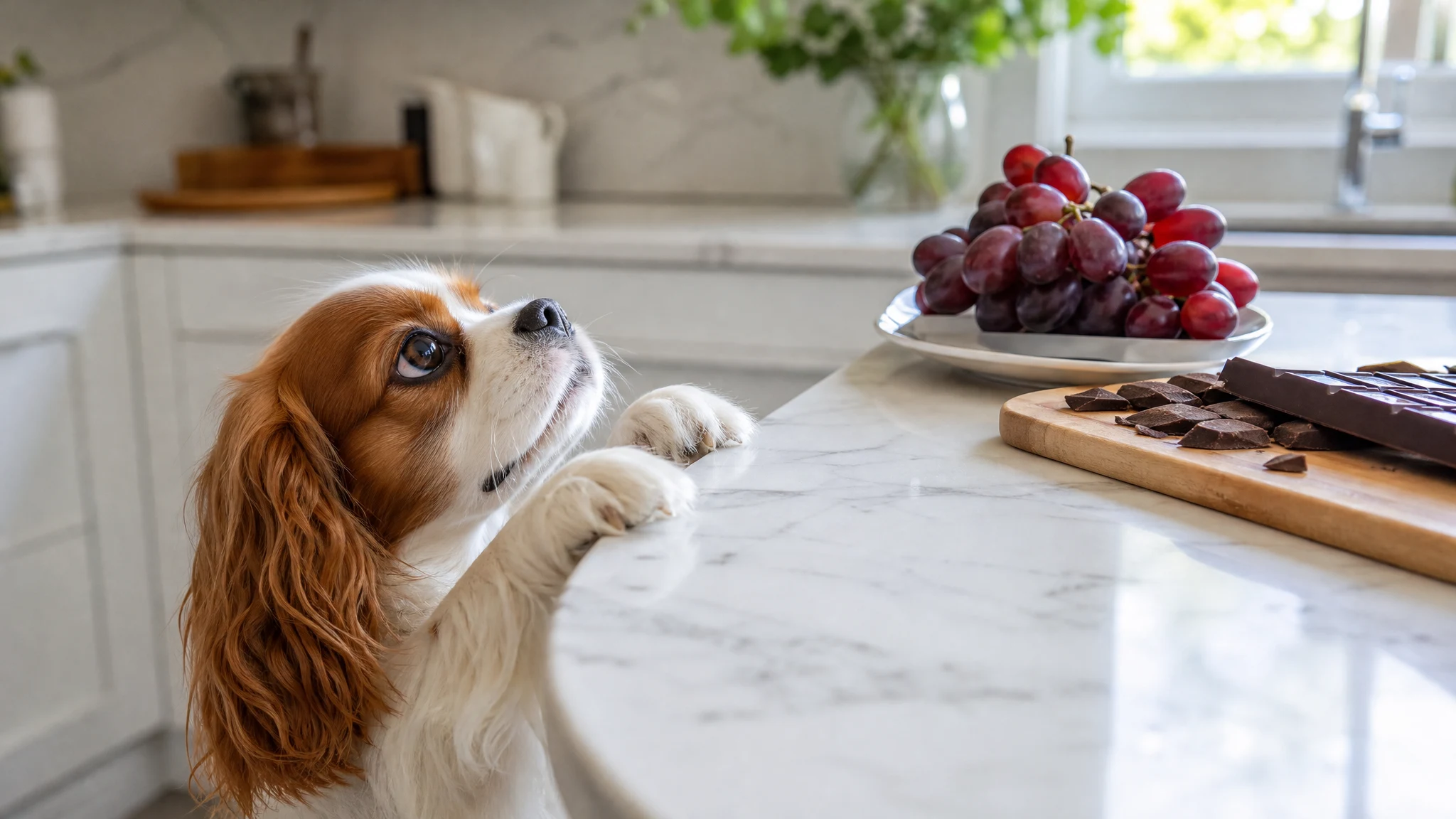
The ASPCA Animal Poison Control Center lists chocolate, grapes and raisins, xylitol, onions and garlic, macadamia nuts, alcohol and caffeine among the common household dangers for dogs. Other foods, such as cooked bones and very fatty scraps, are risky for different reasons. The sections below explain each one.
What can Cavalier King Charles Spaniels not eat that other dogs can?
The toxic foods are the same for every breed. What differs is the margin for error, because a Cavalier is a toy-sized dog. Westminster Kennel Club lists a maximum weight of 18 pounds, so a small amount of a harmful food is a bigger share of the body.
Why does the breed's health history matter for table scraps?
WebMD calls mitral valve disease, a heart condition, the most common health problem in the breed. CavalierHealth.org also describes Cavaliers as prone to obesity. Salty or rich scraps are worth avoiding, and your veterinarian can tell you what suits your own dog.
Foods That Are Toxic
Can Cavalier King Charles Spaniels eat chocolate?
No. The ASPCA lists chocolate as toxic to dogs, and dark chocolate and baking chocolate are generally considered the most concerning. Keep all of it out of reach, including cocoa powder and baked goods that contain it.
Are grapes and raisins safe?
No. The ASPCA lists grapes and raisins as dangerous for dogs. Hidden sources include trail mix, cereal and baked goods, so check what a dropped snack contained.
What is xylitol and where does it hide?
Xylitol is a sweetener the ASPCA lists as dangerous to dogs. It can appear in sugar-free gum, candy, baked goods and some nut butters. Read the ingredient list on anything you share.
Can Cavaliers eat onions and garlic?
No. The ASPCA lists onions and garlic, along with chives and leeks, as harmful to dogs. This includes cooked dishes, powders and seasoning, so a bite of leftover pasta sauce or soup can be a problem.
Are macadamia nuts dangerous?
Yes. The ASPCA lists macadamia nuts as toxic to dogs. Treat cookies and snack mixes that contain them as off limits.
Is alcohol ever okay?
No. The ASPCA lists alcohol as dangerous to dogs. Watch unattended drinks at gatherings, and also foods made with alcohol.
What about coffee, tea and other caffeine?
The ASPCA lists caffeine as a danger to dogs. That covers coffee grounds, tea bags and energy drinks. Dispose of them where a curious dog cannot reach.
Is raw bread dough a problem?
Yes. The ASPCA warns against raw yeast dough for dogs. Keep rising dough covered and out of reach until it is baked.
Foods That Are Risky for Other Reasons
Can Cavaliers eat cooked bones?
It is best to avoid them. Cooked bones can splinter, and a small dog with a delicate mouth can be hurt by the pieces. Ask your veterinarian before giving any bone or hard chew.
Are fatty scraps like bacon or trimmings okay?
They are a poor choice. Very rich foods can upset a dog's stomach, and they add calories quickly to a small dog. If a Cavalier eats a large amount of fat and seems unwell, call your veterinarian.
Should I worry about salty foods?
It is sensible to be careful, especially given how common heart disease is in the breed. Chips, deli meats and salty leftovers are not useful extras. Ask your veterinarian whether sodium matters for your dog.
Do table scraps cause weight gain?
They can. CavalierHealth.org describes the breed as predisposed to obesity, and a toy-sized dog has little room for extra calories. Keep treats small and count them as part of the day's food.
Snacks That Are Usually Fine
Can Cavalier King Charles Spaniels eat peanut butter?
Plain peanut butter is a common treat, but check the label first. If xylitol is listed, do not give it. Serve only a small lick.
Can Cavaliers eat fruits and vegetables?
Many dogs enjoy plain carrots, green beans, blueberries or apple slices without seeds. Offer small pieces, one new food at a time. Your veterinarian can confirm what suits your dog.
Is plain cooked chicken a good treat?
Plain, boneless cooked chicken with no seasoning, onion or garlic is a common reward. Cut it small and keep portions modest. For help choosing a complete daily diet, see our guide to the best dog food for Cavalier King Charles Spaniels.
If Your Dog Eats Something Dangerous
What should I do right away?
Call your veterinarian or an emergency animal hospital, or contact the ASPCA Animal Poison Control Center. Check the ASPCA website for its current phone number and any consultation fee. Do not wait for symptoms, because some problems take time to show.
What should I tell the veterinarian?
Share what your dog ate, roughly how much, and when. Have the package or ingredient list ready, and know your dog's current weight. This helps the team decide what to do.
Should I make my dog vomit?
Only if a veterinarian or poison control tells you to. Some substances do more harm coming back up, and home methods can be unsafe. Follow professional instructions for your dog.
How This Page Was Put Together
This page summarizes published guidance and breed information. We did not feed or test any food ourselves, and a veterinarian decides what is right for an individual dog.
Sources
- ASPCA Animal Poison Control Center, list of toxic and non-toxic foods for dogs (aspca.org)
- Westminster Kennel Club breed page
- WebMD, what to know about Cavalier King Charles Spaniels
- CavalierHealth.org diets page