Dog Food for a Cavalier King Charles Spaniel: What a Healthy Diet Needs
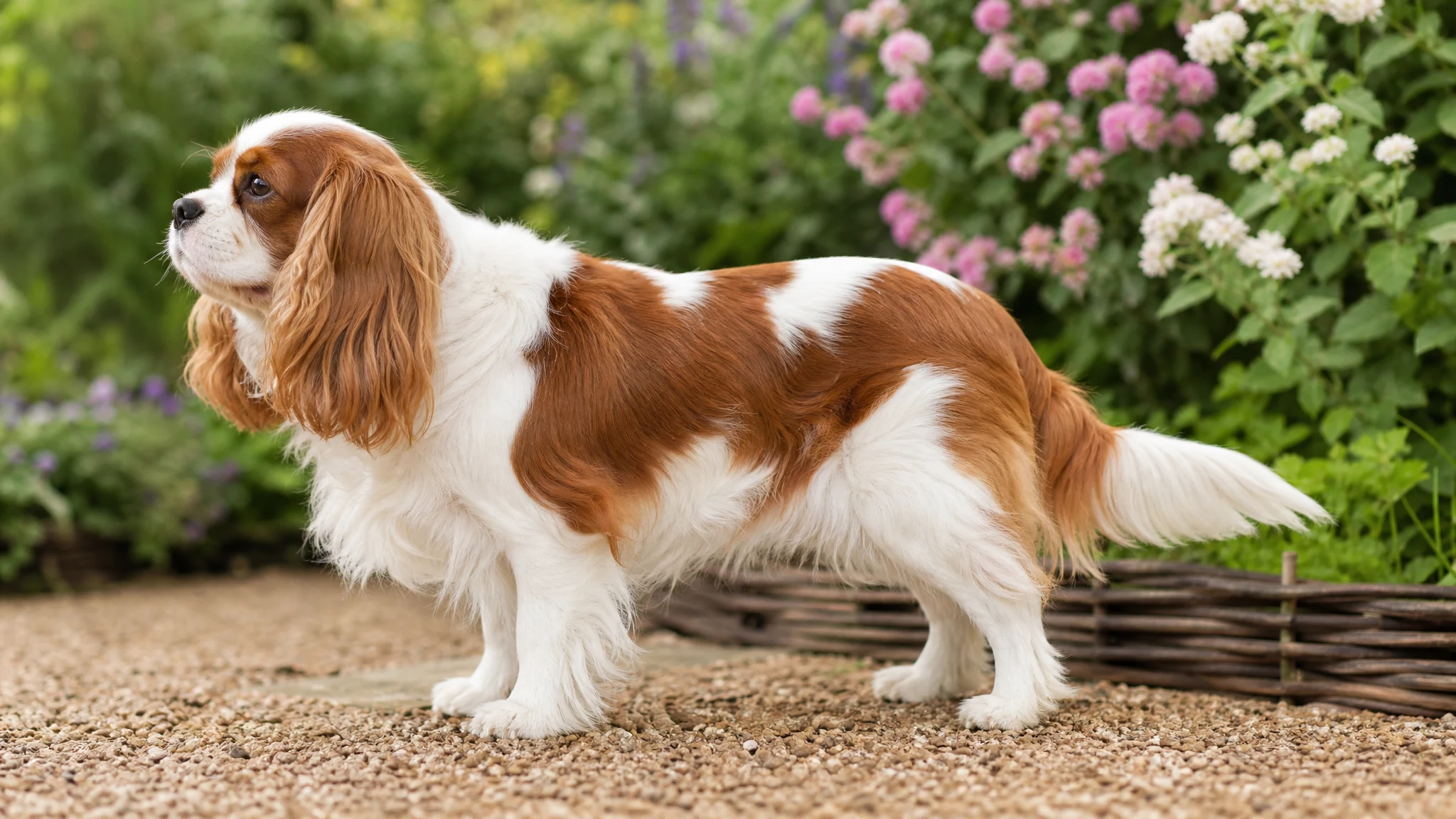
General nutrition information compiled from product labels and published sources, not veterinary advice. Your veterinarian is the right person to choose a diet for your dog, especially one with a health condition.
Choosing dog food for a Cavalier King Charles Spaniel is mostly a label-reading job. The Westminster Kennel Club lists the breed as a toy dog with a maximum weight of 18 pounds and a maximum height of 13 inches. That small frame, a hearty appetite and some breed health concerns shape what to look for.
This guide walks you through the steps. We compared label data published by the brands. We did not run feeding trials or taste tests, so nothing here is a claim about how a dog did on a food.
What You Need Before You Start
- Your dog's current weight from a recent vet visit or a home scale.
- Your dog's age and activity level.
- Any notes from your veterinarian about heart health, weight or allergies.
- The bag or can of any food you are considering, or its brand page.
- A level measuring cup or a kitchen scale.
- A notebook or phone note for tracking meals and body condition.
Step 1: Know the Breed's Diet-Related Health Picture
WebMD describes mitral valve disease (MVD), a heart condition, as the most common health condition in Cavaliers. CavalierHealth.org, a breed-health advocacy site, says the breed is over twenty times more likely to develop it than other breeds. Treat that as a secondary source, but it explains why heart health comes up so often.
No food prevents, treats or cures MVD. If your dog has a heart diagnosis, your veterinarian decides whether sodium or any other part of the diet needs to change. Prescription diets come only from a veterinarian.
CavalierHealth.org also describes the breed as predisposed to obesity, citing a 1986 UK study. Extra weight is a concern for any small dog, and portion control matters for this breed. For more background, see our guide to Cavalier King Charles Spaniel nutrition and the diet factors.
Life expectancy figures vary. WebMD gives 12 to 15 years. CavalierHealth.org reports shorter real-world numbers, including a median age at death of 11.8 years in a 2024 UK study of 6,879 dogs. Your dog's needs will change over time, so plan to revisit the food.
Step 2: Match the Food to Your Dog's Life Stage
Puppies, adults and seniors need different formulas. Vetstreet notes that small dogs can generally move to adult food at about 90 percent of adult weight, typically around 9 to 12 months. Confirm the timing with your veterinarian. Royal Canin's Cavalier puppy formula covers 8 weeks to 10 months, and the adult formula is for purebred Cavaliers 10 months and older.
Vetstreet also says small dogs usually need more calories per pound than large dogs. Some do better with calorie-dense food or several small meals. That is general small-dog guidance, not a Cavalier-specific rule.
Large-breed puppy calcium rules do not apply here, because a Cavalier's adult weight is far under 70 pounds. Whole Dog Journal explains that growth and all-life-stages foods must state either that they include growth of large-size dogs (70 pounds or more as an adult) or that they exclude it. Small-breed puppies can eat either type.
Step 3: Read the Adequacy Statement First
Find the AAFCO statement on the package or brand page. It should say the food is complete and balanced for your dog's life stage, either by meeting the AAFCO nutrient profiles or by passing feeding tests. A food without this statement is not a main diet.
Examples from the brand pages:
- Royal Canin's adult Cavalier formula is formulated to meet AAFCO profiles for maintenance.
- Hill's Science Diet Small & Mini adult states that AAFCO feeding tests substantiate complete and balanced nutrition for adult maintenance.
- VICTOR's Hi-Pro Plus small breed recipes and Freshpet's small dog recipe are formulated for all life stages, except growth of large-size dogs.
Step 4: Read the Ingredients and Nutrient Panel
Ingredients are listed by weight, so the first five tell you the most. Marketing words on the front of the bag do not replace the panel on the back. Look at the protein and fat minimums and the fiber maximum, then compare foods on calories.
The table below uses data published on each brand's own page. Hill's lists averages on a dry matter basis instead of guaranteed minimums, so those numbers are not directly comparable.
| Food | Life stage | Calories | Protein / fat / fiber | First ingredients |
|---|---|---|---|---|
| Royal Canin Cavalier King Charles Adult (dry) | Adult, 10 months+ | 339 kcal per cup | 25% min / 12% min / 4.5% max | Brewers rice, wheat gluten, chicken by-product meal, corn, chicken fat |
| Royal Canin Cavalier King Charles Puppy (dry) | 8 weeks to 10 months | 368 kcal per cup | 28% min / 16% min / 4% max | Chicken by-product meal, brewers rice, corn, chicken fat, wheat gluten |
| Hill's Science Diet Adult Small & Mini Chicken & Brown Rice (dry) | Adult, 1 to 6 years | 357 kcal per cup | Dry matter averages: 25% / 15.3% / 1.5% | Chicken, brown rice, whole grain wheat, whole grain corn, brewers rice |
| Hill's Science Diet Adult 11+ Small & Mini (dry) | Senior, 11+ years | 378 kcal per cup | Dry matter averages: 22.5% / 17.9% / 1.8% | Chicken, brown rice, brewers rice, whole grain wheat, chicken fat |
| Freshpet Small Dog Bite Size Chicken (fresh) | All life stages except large-breed growth | 267 kcal per cup | 16% min / 12% min / 1.5% max | Chicken, chicken liver, carrots, cranberries, eggs |
| VICTOR Hi-Pro Plus Small Breed Adult (dry) | All life stages except large-breed growth | 360 kcal per cup | 30% min / 14% min / 5% max | Beef, chicken meal, beef meal, brown rice, whole grain millet |
| VICTOR Hi-Pro Plus Small & Medium Breed Puppy (dry) | All life stages except large-breed growth | 383 kcal per cup | 30% min / 18% min / 5% max | Beef, chicken, beef meal, chicken meal, whole grain sorghum |
Hill's also makes a Small & Mini puppy canned entree at 223 kcal per 5.8 oz can. Its page gives dry matter averages of 28.5% protein, 22.5% fat and 1.8% less fiber than the other values, so check the brand page for the full label.
Some points stand out from the label data:
- Royal Canin is the only brand here with a Cavalier-specific formula. Its kibble is shaped for the breed's tapered muzzle and scissors bite, but the brand gives no dimensions.
- Calories per cup range from 267 (Freshpet) to 383 (VICTOR puppy). The same cup of two different foods can mean a very different daily intake.
- Freshpet's recipe is grain free. The others listed here are not.
Step 5: Think Carefully About Grain-Free Diets
The FDA has investigated a possible link between certain diets and canine dilated cardiomyopathy (DCM). Its page covers reports from January 1, 2014 through April 30, 2019: 524 reports, 560 dogs affected and 119 dog deaths. The FDA's last update was December 23, 2022. It has said it will not post further updates until there is meaningful new scientific information.
The investigation has not shown that any diet causes DCM. Because Cavaliers already have heart concerns, ask your veterinarian before choosing a grain-free or unusual formula. Read the FDA page yourself rather than relying on a bag's marketing.
Step 6: Set a Starting Portion From the Label Guide
Feeding guides are starting points, not prescriptions. Examples from the brands' own charts:
- VICTOR Hi-Pro Plus Small Breed Adult lists 1 cup daily for a 10 pound dog and 1 1/2 cups for a 15 pound dog.
- Freshpet lists 1 to 1 1/4 cups daily for 11 to 15 pounds and 1 1/4 to 1 2/3 cups for 16 to 20 pounds, fed as one meal or split in two.
- Royal Canin's adult Cavalier chart covers 11 to 20 pounds, split by low, medium and high activity.
- Hill's charts run by weight, and the brand says to adjust amounts to maintain optimal weight.
Measure with a level cup or a scale. Split the daily amount into two or more meals. Remember that treats count toward the day's calories.
Step 7: Switch Foods Slowly and Track the Results
Hill's recommends transitioning over 7 days. Mix a little of the new food into the old, and increase the new portion each day. If stools soften or your dog stops eating, slow down and call your veterinarian.
Weigh your dog every few weeks and check body condition by feel. You should be able to feel the ribs under a light covering. Adjust portions in small steps, and ask your veterinarian to confirm an ideal weight.
Tips and Common Mistakes
- Skipping the adequacy statement. Complete and balanced wording matters more than the front-of-bag claims.
- Feeding by the bag chart only. Adjust to your dog's body condition, not just the printed number.
- Ignoring treats. Cavaliers can gain weight easily, so count chews and table scraps.
- Using puppy food too long. Puppy formulas are richer in calories. Ask your veterinarian when to switch.
- Picking a food for a diagnosis without your vet. Heart, allergy and weight diets are a veterinary decision.
- Chasing breed labels alone. A breed-named food can be a fine choice, but you still need to read its label and compare it with others.
- Switching all at once. A fast change can upset the stomach.
What to Expect
With a complete and balanced food, measured portions and regular weigh-ins, you may see steady energy, a healthy coat and stable weight over time. Results vary from dog to dog, and no diet can promise a particular health outcome. Your veterinarian is the right person to interpret changes in weight, stools, appetite or heart health.
Check with each brand directly for current formulas and availability, since labels can change. For Cavalier-specific questions that no source answers clearly, such as an official breed weight standard, ask your veterinarian or a Cavalier breed club.
Sources
- Westminster Kennel Club, breed page
- WebMD, What to Know About Cavalier King Charles Spaniels
- CavalierHealth.org, overview
- CavalierHealth.org, diets
- Vetstreet, Why Size Matters When Transitioning Your Dog From Puppy to Adult Food
- Whole Dog Journal, In the Fine Print: Nutritional Adequacy Statements
- FDA, Investigation into a Potential Link Between Certain Diets and Canine DCM
- Royal Canin, Cavalier King Charles Adult
- Royal Canin, Cavalier King Charles Puppy
- Hill's Science Diet, Adult Small & Mini
- Hill's Science Diet, Adult 11+ Small & Mini
- Hill's Science Diet, Puppy Small & Mini canned
- Freshpet, Small Dog Bite Size Chicken Recipe
- VICTOR, Hi-Pro Plus Small Breed Adult
- VICTOR, Hi-Pro Plus Small & Medium Breed Puppy