Best Food Bowls for a Cavalier King Charles Spaniel
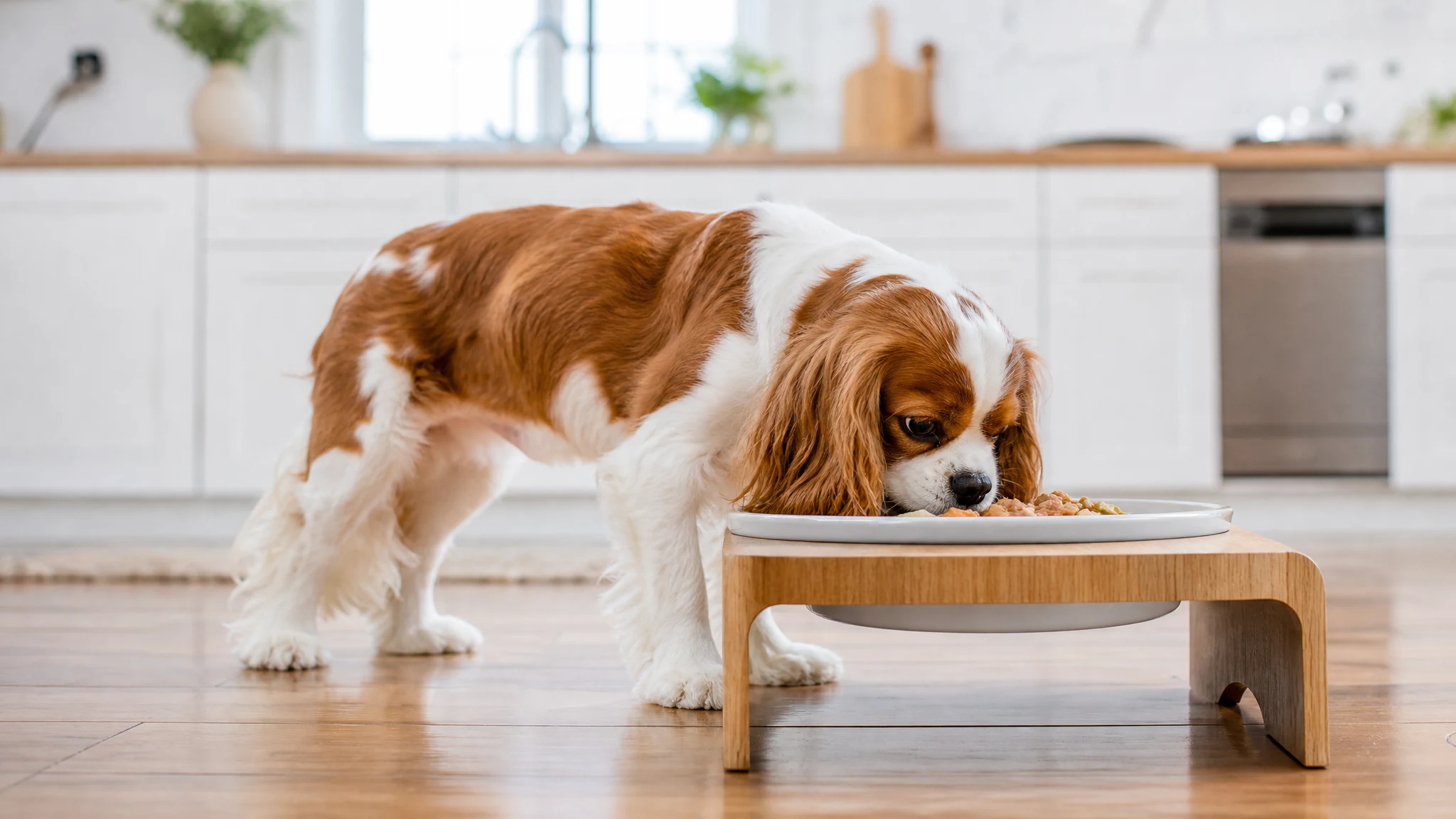
General nutrition information compiled from product labels and published sources, not veterinary advice. Your veterinarian is the right person to choose a diet for your dog, especially one with a health condition.
A food bowl looks like a simple purchase. For a toy-sized dog, the details still matter. The bowl affects how your Cavalier eats, how clean the mealtime stays, and how easy it is to measure what goes in.
This guide walks through choosing, setting up and maintaining a bowl, step by step. It is a how-to, not a product review. We did not test or feed any bowls ourselves, so you will not find rankings or brand picks here. You will find a method for judging any bowl against your own dog.
What Is the Best Kind of Food Bowl for a Cavalier?
There is no single best bowl. The right one fits your dog's size, mouth and eating habits, and it is easy for you to clean and measure with.
Start with the dog. The Westminster Kennel Club lists the Cavalier King Charles Spaniel in the toy group, with a maximum height of 13 inches and a maximum weight of 18 pounds. WebMD gives a typical adult range of 13 to 18 pounds. That is a small dog, so a bowl made for a large breed is usually too big and too deep.
Royal Canin describes its Cavalier adult kibble as shaped for the breed's slightly tapered muzzle and scissors bite. That is a label description of one brand's food, not a bowl rule. It does suggest that mouth shape is worth thinking about when you pick a bowl.
Materials and Supplies You Need
- One food bowl sized for a toy dog (see Step 2).
- One water bowl, kept separate from the food bowl.
- A dry measuring cup or kitchen scale. Bowls are poor measuring tools.
- A non-slip mat or silicone tray, if your floor is slick or your dog pushes the bowl around.
- Your food's feeding guide, from the bag, can or brand page.
- Dish soap, a bottle brush and hot water for daily washing.
Step-by-Step: Choosing and Setting Up the Bowl
Step 1: Decide what kind of food you feed
Dry, wet and fresh foods have different bowl needs.
- Dry kibble works in most shapes. A shallow, wide bowl keeps pieces easy to reach.
- Wet food sticks to the sides of deep bowls. A flatter bowl is easier to scrape clean.
- Fresh, refrigerated food is soft and sticky, so a smooth, non-porous surface helps cleanup.
If you mix textures, choose the bowl for the stickiest food you serve.
Step 2: Pick the size and depth
Aim for a bowl that holds one meal with room to spare, without a big empty space around it. The meals themselves are small. Hill's Science Diet lists a label chart for its Small & Mini adult food that runs from 1/4 cup a day for a 2 pound dog to 2 cups a day for a 25 pound dog. VICTOR's chart for its small breed adult recipe lists 1 cup a day at 10 pounds and 1 1/2 cups at 15 pounds. Those are label starting points for those products, not your dog's amount.
A Cavalier eating one or two daily portions of that size does not need a huge bowl. A wide, fairly shallow shape is a sensible default for a small dog. Dogs with different faces and builds can still vary, so watch how yours reaches for the food.
Step 3: Choose a material
Here is a plain comparison of common options. These are general considerations, not test results.
| Material | What to like | What to watch |
|---|---|---|
| Stainless steel | Durable, smooth and easy to wash | Light bowls can slide or clang unless they have a rubber base |
| Ceramic | Heavy, so it stays put | Can chip or crack, and chips are hard to clean well |
| Plastic | Light and cheap | Scratches can hold residue, and some dogs chew it |
| Silicone | Flexible, good for travel | Can be lightweight and tip easily |
If you buy ceramic, check the bowl or the maker's page for whether it is food safe and dishwasher safe. Check the brand directly for those details rather than assuming.
Step 4: Check the bowl against your dog's face and ears
Set the empty bowl down and watch your dog eat a small test portion. Look for these signs:
- Does your dog have to push kibble up the side to get it?
- Does the bowl slide across the floor?
- Do the ears or face end up deep in the food?
If your dog's ears land in the food, a narrower, taller bowl or a gentle rim may help. Try one change at a time so you can tell what worked.
Step 5: Measure the food, then pour it in
Do not fill the bowl by eye. A toy dog's daily amount is small, and small errors add up. The CavalierHealth.org diets page describes the breed as predisposed to obesity, citing a 1986 UK study. It is an advocacy site and a secondary source, but it is one more reason to measure.
Use the feeding guide for the food you chose. Some examples from brand pages:
- Royal Canin's Cavalier adult formula has a daily table by weight (11 to 20 pounds) and activity level (low, medium or high). It lists 339 kcal per cup as fed.
- Freshpet's Small Dog Bite Size Chicken Recipe lists 1 to 1 1/4 cups a day for 11 to 15 pounds, and 1 1/4 to 1 2/3 cups for 16 to 20 pounds, as one meal or split in two.
- Hill's Science Diet and VICTOR also publish weight-based charts and say to adjust to keep a healthy weight.
Treat every chart as a starting point. Calories per cup differ a lot between foods, so a cup of one food is not the same as a cup of another. For a fuller walkthrough of weight, age and activity, see our guide on how much to feed a Cavalier King Charles Spaniel.
If your dog has a health condition, confirm amounts with your veterinarian. Mitral valve disease is described by WebMD as the most common health condition in the breed. Whether it changes feeding is a decision for your vet, not a bowl or a label.
Step 6: Set a schedule and a calm spot
Pick a quiet corner with a non-slip surface, away from foot traffic. Put the water bowl nearby but not touching the food.
For puppies, Vetstreet notes that small dogs may do better with several small meals. Royal Canin's puppy formula covers ages 2 to 9 months with a table by age and target adult weight, and it says to transition to the adult formula after 10 months. Vetstreet says small dogs can generally move to adult food at about 90 percent of adult weight, often around 9 to 12 months. That is general small-dog guidance, not specific to Cavaliers, so ask your vet when to switch.
For adults, one or two meals a day is common on label guides. Freshpet, for example, says its daily amount can be fed as one meal or split in two. Keep the times steady.
Step 7: Pick up the bowl and wash it daily
Leave the bowl down for a set period, then lift it. Wash it with hot water and soap after each use, or at least daily. Rinse well and let it dry. Wet and fresh foods leave residue faster, so they need the most attention. Replace any bowl that is cracked, deeply scratched or chewed.
Should You Use a Slow Feeder or Raised Bowl?
These are optional extras, and neither is required for a Cavalier.
- Slow feeder or puzzle bowl. If your dog gulps meals, a slow feeder may help stretch out mealtime. Pick one with shallow ridges rather than deep, narrow channels that a small muzzle cannot reach into.
- Raised bowl. A stand can save neck bending for some dogs. We have no breed source that says it is needed or better. If you are curious about it for your dog, ask your veterinarian.
Tips and Common Mistakes
- Buying a bowl that is too big. A big bowl makes a small portion look tiny and invites overfilling.
- Measuring with the bowl. Always use a cup or scale, then pour.
- Topping up without checking. Refilling a bowl all day makes it hard to track what your dog eats, and the breed is described as prone to weight gain.
- Skipping the daily wash. Old film builds up fast, especially with wet food.
- Judging by price or looks. A plain, stable, easy-to-clean bowl often does the job. We did not compare bowls by testing them, so do not read a pricey design as proof of better results.
- Changing food and bowl together. If appetite shifts, you will not know why. Hill's suggests a gradual 7 day transition when changing foods. Change the bowl and the food on different weeks.
- Using a supplement in the bowl without asking. Check with your vet before adding any supplement, and follow the vet's directions on amounts.
How We Approached This Guide
We compared published label data and brand feeding charts. We did not run feeding trials, taste tests or bowl tests. Where a source is secondary, such as WebMD, Vetstreet or CavalierHealth.org, we said so. For breed-specific questions beyond what those sources say, check with a Cavalier breed club or your veterinarian.
What to Expect
With a well-sized, stable bowl and measured portions, many owners find mealtimes tidier and easier to track. Your dog may eat more comfortably and with less pushing of the bowl around. A measured routine may also make it easier to notice changes in appetite or weight early, so you can raise them with your vet.
A bowl does not change what is in the food or treat any health problem. Results vary from dog to dog. If your Cavalier suddenly eats less, gulps, coughs at meals or loses weight, call your veterinarian rather than swapping bowls.
Quick Checklist
- Match the bowl to the food type.
- Choose a toy-dog size, wide and fairly shallow.
- Pick a material you can clean easily.
- Test it against your dog's face and ears.
- Measure each meal with a cup or scale.
- Feed on a steady schedule in a calm spot.
- Wash daily and replace damaged bowls.
Sources
- Westminster Kennel Club, Cavalier King Charles Spaniel breed page
- WebMD, What to Know About Cavalier King Charles Spaniels
- CavalierHealth.org, Diets
- Vetstreet, Why size matters when transitioning your dog from puppy to adult food
- Royal Canin, Cavalier King Charles Adult
- Royal Canin, Cavalier King Charles Puppy
- Hill's Science Diet, Adult Small & Mini Chicken & Brown Rice Recipe
- Freshpet, Small Dog Bite Size Chicken Recipe
- VICTOR, Hi-Pro Plus Small Breed Adult