Top Puppy Food Picks for Cavalier King Charles Spaniel Puppies
General nutrition information compiled from product labels and published sources, not veterinary advice. Your veterinarian is the right person to choose a diet for your dog, especially one with a health condition.
Picking a puppy food is mostly a label-reading job. This guide shows you how to read the labels and compare a few real options for a Cavalier King Charles Spaniel puppy. The goal is to help you find the best food for cavalier king charles spaniel puppies in your own home, with your veterinarian's input.
One honest note about method. We compared label data from each brand's own page: the AAFCO statement, life stage, protein, fat, calories and first ingredients. We did not run feeding trials or taste tests, and we are not ranking foods by how well dogs do on them.
Why Cavalier puppies are a special case
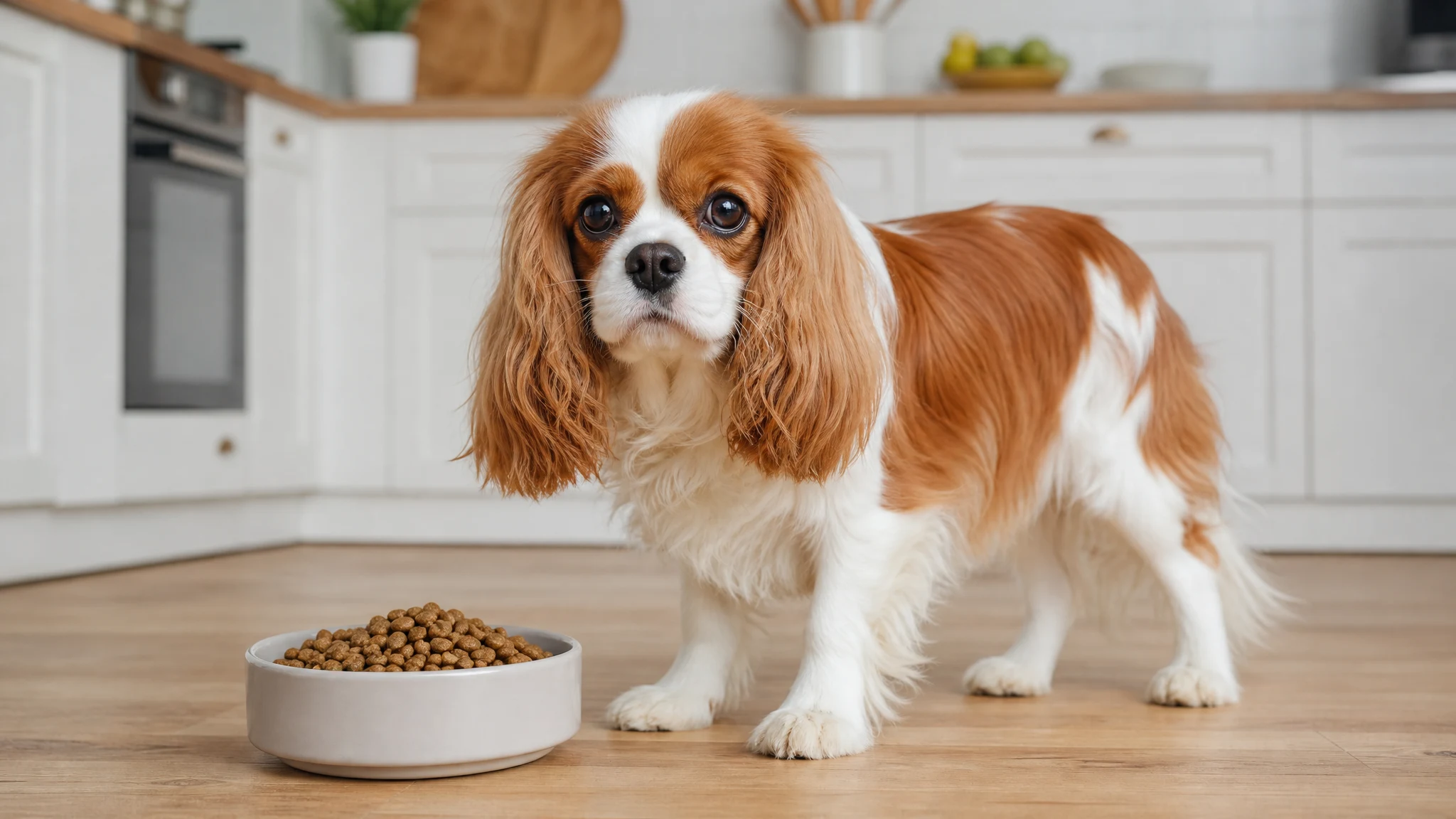
The Westminster Kennel Club lists the Cavalier as a toy breed. WebMD gives an adult size of about 13 to 18 pounds and 12 to 13 inches tall. That has two practical effects.
- Large-breed puppy rules do not apply. Large-breed calcium limits are meant for dogs expected to reach 70 pounds or more. A Cavalier is nowhere near that.
- Calories matter. Vetstreet notes that small dogs usually need more calories per pound than large dogs. They may do better with calorie-dense food or several small meals.
Weight control is also worth thinking about early. CavalierHealth.org, an advocacy site, describes the breed as predisposed to obesity. It cites a 1986 UK study for that. WebMD calls mitral valve disease, a heart condition, the most common health condition in the breed. Food does not prevent or treat either one. Your veterinarian decides what is right for an individual dog, so mention both when you talk about a feeding plan.
What you need before you start
- Your puppy's current weight and age.
- The bag, can or tray labels of the foods you are considering, or each brand's product page.
- A kitchen scale or a measuring cup you will use every time.
- A notebook or phone note for weights and meals.
- Your veterinarian's contact details, for the final check.
Step-by-step: how to choose a puppy food
Step 1: Find the AAFCO statement
Look for the small block of text that begins with "formulated to meet" or "animal feeding tests using AAFCO procedures substantiate." It must name a life stage. You want "growth" or "all life stages."
The Whole Dog Journal explains that growth and all-life-stages foods must say either "including growth of large size dogs (70 lb or more as an adult)" or "except for growth of large size dogs." A Cavalier puppy can eat either type, so neither wording is a problem here.
Step 2: Check that the food fits a small breed
Look for a small, mini or breed-specific formula. Kibble size is the other thing to check. Brands rarely give dimensions, so you may need to see the kibble in person. A tiny puppy should be able to pick it up and chew it easily.
Step 3: Read the guaranteed analysis and calories
Protein and fat minimums tell you roughly how rich the food is. Calories per cup (or per can) tell you how much to measure. Two foods with similar protein can differ a lot in calories, which changes the portion.
Step 4: Look at the first five ingredients
Ingredients are listed by weight before cooking. The first five give you a rough picture of what the food is built from. They do not tell you quality or digestibility, so treat them as one clue and not a verdict.
Step 5: Compare the options side by side
The table below uses label data from each brand's own page. Where a brand does not publish a figure, it says so. Protein and fat for the canned Hill's food are dry matter averages from the brand's nutrient table, not guaranteed minimums.
| Food | AAFCO life stage | Protein | Fat | Calories |
|---|---|---|---|---|
| Royal Canin Cavalier King Charles Puppy (dry) | Growth, including large-size dogs | 28% min | 16% min | 368 kcal per cup |
| Hill's Science Diet Puppy Small & Mini (canned, 5.8 oz) | Growth and gestation/lactation (feeding tests) | 28.5% dry matter average | 22.5% dry matter average | 223 kcal per can |
| VICTOR Hi-Pro Plus Small & Medium Breed Puppy (dry) | All life stages, except large-size growth | 30% min | 18% min | 383 kcal per cup |
| Freshpet Small Dog Bite Size Chicken (fresh) | All life stages, except large-size growth | 16% min | 12% min | 267 kcal per cup |
Percentages on dry, canned and fresh foods are not directly comparable, because moisture differs. Compare dry with dry, and treat the wet and fresh figures as separate groups.
The foods, one by one
Royal Canin Cavalier King Charles Puppy
This is the only food here made for the breed. Royal Canin's page lists it for puppies from 8 weeks to 10 months. The first five ingredients are chicken by-product meal, brewers rice, corn, chicken fat and wheat gluten. Fiber is 4% maximum. The kibble is described as designed for Cavaliers to pick up and chew, though no dimensions are given.
The feeding table runs by puppy age (2 to 9 months) and target adult weight of 11, 15 or 18 pounds. That fits the breed's weight range well. The brand says to move to its adult formula after 10 months.
Hill's Science Diet Puppy Small & Mini (canned)
Hill's lists this canned entree for puppies up to one year, and for pregnant or nursing dogs. The brand's page text calls it a Beef & Barley Entree, although the web address says chicken, so read the can in your hand. The first five ingredients are water, beef, chicken, whole grain corn and cracked pearled barley. The AAFCO claim rests on feeding tests.
It is a single canned option, so many owners would use it as a topper or a mixed meal. Ask your veterinarian before you combine it with another food. Hill's does not publish guaranteed minimums on that page.
VICTOR Hi-Pro Plus Small & Medium Breed Puppy
The VICTOR page shows the highest protein and calories in the group: 30% minimum protein, 18% minimum fat and 383 kcal per cup. The first five ingredients are beef, chicken, beef meal, chicken meal and whole grain sorghum. It is not grain-free.
Because it is calorie-dense, small measuring errors add up faster. VICTOR says that after age one you should feed to keep good body condition, using the chart as a guide.
Freshpet Small Dog Bite Size Chicken Recipe
The Freshpet page lists chicken, chicken liver, carrots, cranberries and eggs as the first five ingredients. It is a grain-free recipe with 16% minimum protein and 12% minimum fat, and it is labeled for all life stages except growth of large-size dogs. At 267 kcal per cup it is the least calorie-dense option here, so cup amounts are larger.
The FDA has an ongoing page on a possible link between certain diets, including grain-free ones, and canine dilated cardiomyopathy. The page's last update was December 23, 2022, and it covers reports from January 1, 2014 through April 30, 2019. The FDA says it will not post further updates until there is meaningful new scientific information. Because Cavaliers have heart health concerns of their own, ask your veterinarian whether a grain-free recipe suits your puppy.
Step 6: Measure, start slowly and track weight
Use the label's feeding guide as a starting point, not a target. The brand's chart is built for an average dog, and your puppy may need more or less.
- Weigh your puppy and write the number down.
- Find the matching row in the brand's chart and divide that day's amount into several small meals.
- Switch foods gradually. Hill's suggests a 7 day transition for its foods, mixing more of the new food in each day.
- Weigh your puppy regularly and adjust with your veterinarian.
Step 7: Plan the move to adult food
Vetstreet says small dogs can generally move to adult food at about 90 percent of their adult weight, often around 9 to 12 months. This is general small-dog guidance and not specific to Cavaliers. Royal Canin's own puppy formula says to switch after 10 months. Your veterinarian can confirm the right timing for your puppy.
Tips and common mistakes
- Do not buy by the front of the bag. Pictures and slogans are marketing. The AAFCO statement and guaranteed analysis are the facts.
- Do not mix up cups and cans. Calories are listed per cup for dry and fresh food, but per can for the Hill's entree.
- Do not use a large-breed puppy food by default. It is not needed for a dog that tops out around 18 pounds.
- Do not free-feed. Measured meals make weight changes easier to spot, which matters for a breed said to be prone to obesity.
- Do not change foods often. If a switch seems to upset your puppy's stomach, call your veterinarian.
- Do not add supplements on your own. Complete puppy foods are built to be balanced. Ask your veterinarian first.
- Do not treat these picks as a ranking. They are a short list for comparison, not a verdict.
What to expect
A complete and balanced puppy food, fed in measured amounts, is meant to support steady growth. Many owners find that a good fit shows up as an energetic puppy, a healthy body shape and firm, regular stools. These signs vary from dog to dog, and no food can promise a particular outcome.
Food does not prevent or cure any health condition, including heart disease, allergies or joint problems. If your puppy has loose stools that last, itching, a poor coat, or unusual weight gain or loss, your veterinarian is the right person to ask. Prescription diets are only something a veterinarian prescribes.
Next steps
Once you have narrowed the list, see our wider roundup of dog foods for Cavalier King Charles Spaniels for adult and senior label comparisons. Then bring your short list to your veterinarian and ask which one fits your puppy.
Sources
- Royal Canin: Cavalier King Charles Puppy
- Hill's Pet: Science Diet Puppy Small & Mini canned
- VICTOR: Hi-Pro Plus Small & Medium Breed Puppy
- Freshpet: Small Dog Bite Size Chicken Recipe
- FDA CVM: canine dilated cardiomyopathy investigation
- Westminster Kennel Club: Cavalier King Charles Spaniel
- WebMD: Cavalier King Charles Spaniels
- CavalierHealth.org: diets
- Vetstreet: transitioning from puppy to adult food
- Whole Dog Journal: nutritional adequacy statements