Best Puppy Food Brands for Cavalier King Charles Spaniel Puppies
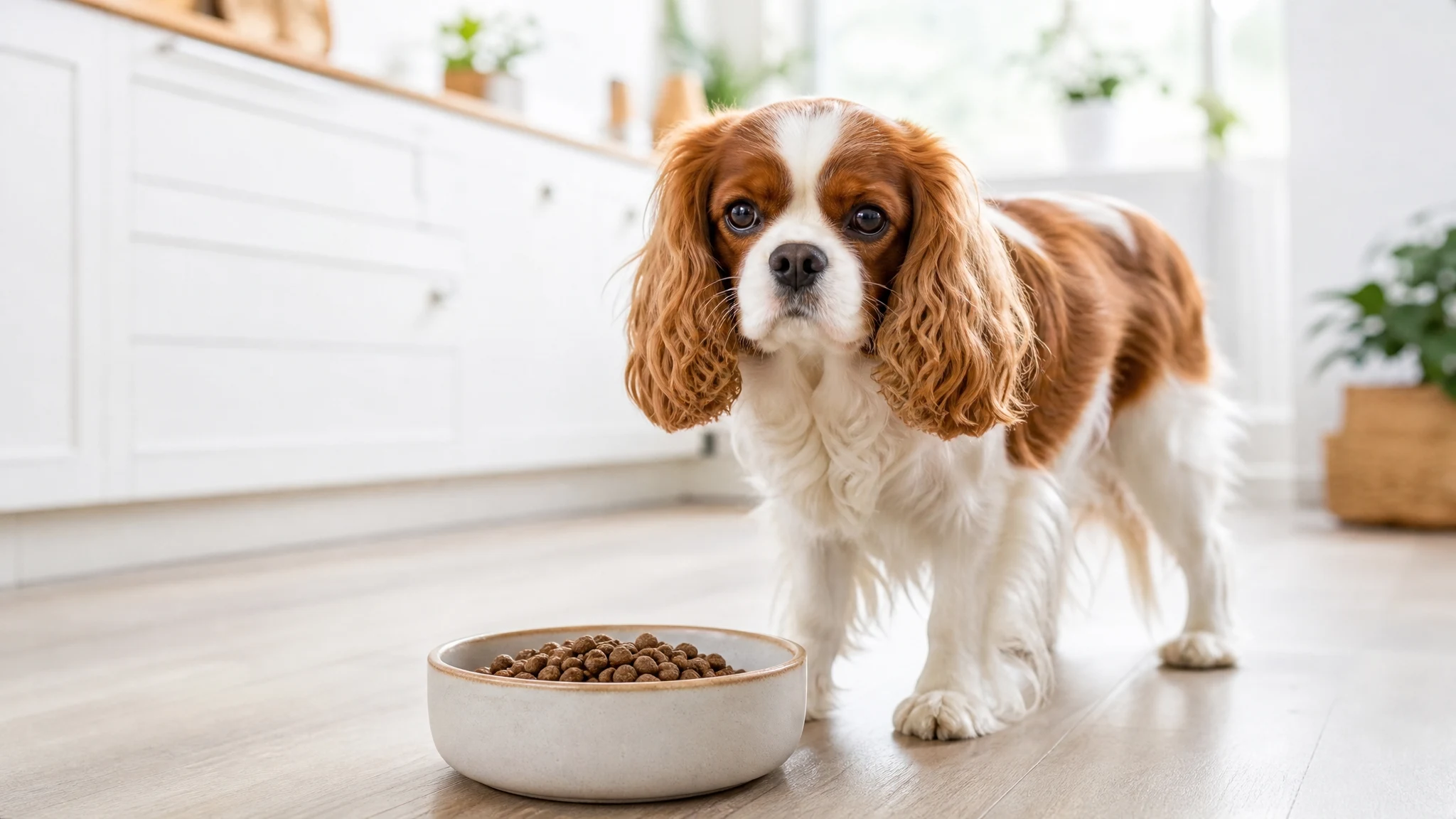
General nutrition information compiled from product labels and published sources, not veterinary advice. Your veterinarian is the right person to choose a diet for your dog, especially one with a health condition.
Choosing the best puppy food for Cavalier King Charles Spaniel puppies comes down to reading labels well. Marketing on the front of the bag tells you little. The nutritional adequacy statement, the ingredient list and the calorie count on the back tell you much more.
This guide walks you through a simple label-comparison method, then applies it to several puppy-appropriate foods. We compared label data only. We did not run feeding trials or taste tests, and nothing here says one food will work better for your puppy than another.
What You Need Before You Start
- The front and back of each food's bag, or the product page on the brand's own website.
- Your puppy's current weight and age.
- A kitchen scale or a measuring cup, so you can follow a feeding guide accurately.
- A notepad or spreadsheet for side-by-side notes.
- A veterinarian appointment, or a recent visit record, so you can confirm your choice.
Know the Breed Basics First
The Westminster Kennel Club lists the Cavalier as a toy breed. WebMD gives an adult size of 13 to 18 pounds and 12 to 13 inches tall. That is far below the 70 pound threshold used in large-breed growth labeling, so large-breed puppy rules do not apply to your dog.
Small dogs usually need more calories per pound than big ones. Vetstreet notes they may do well on calorie-dense food or several small meals. A tiny puppy can also have trouble with large or hard kibble, so kibble size is worth a look.
WebMD calls mitral valve disease, a heart condition, the most common health condition in the breed. CavalierHealth.org describes the breed as predisposed to obesity. Food does not prevent or treat either one. Both are good reasons to talk with your veterinarian about weight and diet from the start.
Step-by-Step: How to Compare Puppy Foods
Step 1: Find the AAFCO statement
Look for a line saying the food is formulated to meet AAFCO Dog Food Nutrient Profiles for growth, or for all life stages. A food labeled only "for maintenance" is built for adult dogs and is not a puppy food.
You will also see one of two phrases. One is "including growth of large size dogs (70 lb or more as an adult)." The other is "except for growth of large size dogs." Whole Dog Journal explains that either type is fine for a small-breed puppy, so a Cavalier puppy can eat both.
Step 2: Check the life stage and size
Confirm the food says puppy, growth or all life stages. Then check whether it is made for small or toy breeds. A breed-specific or small-breed formula is not automatically better, but it often means smaller pieces and a denser calorie count.
Step 3: Read the first five ingredients
Ingredients are listed by weight before cooking. The first five show the main building blocks. Notice whether they are whole meats, meals, by-products or grains. None of these is good or bad on its own. You are simply learning what the food is made of.
Step 4: Compare protein, fat and calories
Use the guaranteed analysis for minimum protein and fat. Then find calories per cup, since that decides how much you feed. Be careful comparing foods from different brands. Some pages list guaranteed minimums, and others list dry matter averages.
Step 5: Use the brand's feeding guide as a starting point
Every brand publishes a feeding chart. Treat it as a first estimate, then adjust to your puppy's body condition with your veterinarian's guidance.
Label Comparison of Puppy-Appropriate Foods
The table below uses data from each brand's own product page. A blank "not listed" means the page did not give that figure.
| Food | AAFCO statement | Protein / Fat / Fiber | Calories |
|---|---|---|---|
| Royal Canin Cavalier King Charles Puppy (dry) | Growth, including large-size dogs | 28% min / 16% min / 4% max | 368 kcal per cup |
| VICTOR Hi-Pro Plus Small & Medium Breed Puppy (dry) | All life stages, except growth of large-size dogs | 30% min / 18% min / 5% max | 383 kcal per cup |
| Hill's Science Diet Puppy Small & Mini Entree (canned) | Growth and gestation/lactation, by feeding tests | Dry matter averages: 28.5% / 22.5% / 2.1% | 223 kcal per 5.8 oz can |
| Freshpet Small Dog Bite Size Chicken Recipe (fresh) | All life stages, except growth of large-size dogs | 16% min / 12% min / 1.5% max | 267 kcal per cup |
Royal Canin Cavalier King Charles Puppy
This is the only food here made for the breed by name. Royal Canin's product page lists it for puppies from 8 weeks to 10 months. The first five ingredients are chicken by-product meal, brewers rice, corn, chicken fat and wheat gluten. The kibble is described as easy for Cavaliers to pick up and chew, though no dimensions are given.
The feeding table runs by age (2 to 9 months) and target adult weight of 11, 15 or 18 pounds. The brand says to move to its adult formula after 10 months.
VICTOR Hi-Pro Plus Small & Medium Breed Puppy
The VICTOR product page shows the highest protein and a high calorie count per cup of the dry foods here. The first five ingredients are beef, chicken, beef meal, chicken meal and whole grain sorghum. It is an all-life-stages food, so it is not labeled for puppies only.
Its feeding chart is by weight and age. After age one, VICTOR says to feed to maintain good body condition.
Hill's Science Diet Puppy Small & Mini (canned)
The Hill's product page supports growth for puppies up to one year. It also supports pregnant or nursing dogs. The first five ingredients are water, beef, chicken, whole grain corn and cracked pearled barley.
The page shows no guaranteed analysis, only dry matter averages, so the protein and fat numbers are not directly comparable with the minimums above. Hill's states its AAFCO claim rests on animal feeding tests. Some owners mix wet food with dry. If you do, count the calories from both.
Freshpet Small Dog Bite Size Chicken Recipe
The Freshpet product page lists a fresh, grain-free recipe for all life stages except growth of large-size dogs. The first five ingredients are chicken, chicken liver, carrots, cranberries and eggs. Protein is lower than in the dry foods, but moisture content explains much of that gap.
Because it is grain-free, read the FDA's canine dilated cardiomyopathy (DCM) investigation page. The FDA's latest update was December 23, 2022. It says it will not post more updates until there is meaningful new scientific information. Whether any food suits your puppy is a question for your veterinarian.
Step 6: Narrow Your List With Your Veterinarian
Bring your notes to a checkup. Ask which life-stage statement fits your puppy, what calorie range to aim for, and how to track body condition. Only a veterinarian can say whether your puppy needs a special diet. Prescription diets come only from a veterinarian.
For more options beyond puppy formulas, see our guide to dog food for Cavalier King Charles Spaniels.
Step 7: Transition Slowly and Measure Meals
Whatever you pick, switch foods gradually. Hill's suggests a 7 day transition for its foods. A common approach is to mix a little new food into the old and raise the share each day. If the stool turns loose or your puppy stops eating, pause and call your veterinarian.
Measure each meal rather than eyeballing it. Divide the daily amount into several small meals, as Vetstreet notes can suit small dogs.
Step 8: Plan the Move to Adult Food
Vetstreet says small dogs can generally move to adult food at about 90 percent of adult weight, often around 9 to 12 months. Royal Canin's breed puppy formula is listed up to 10 months. Confirm timing with your veterinarian, since puppies grow at different rates.
Tips and Common Mistakes
- Do not pick by the front of the bag. Words like "natural" or "premium" are not nutrition data.
- Do not compare mismatched numbers. Guaranteed minimums, dry matter averages and as-fed values are different measures.
- Do not skip calories per cup. A food with more calories per cup needs a smaller serving. Overfeeding is easy with a tiny dog, and the breed is described as prone to weight gain.
- Do not use a maintenance-only food for a puppy. Look for a growth or all-life-stages statement.
- Do not change foods often. Frequent switching makes it hard to tell what is working.
- Do not rely on treats and extras. Count them in the daily calories.
- Do not add supplements without asking. Your veterinarian decides what, if anything, your puppy needs.
What to Expect
A food that suits your puppy may be associated with steady growth, regular stools, steady energy and a healthy coat. These signs vary between dogs and depend on many things besides food. Results are not guaranteed.
Check your puppy's body condition at home and at each vet visit. You should be able to feel the ribs under a light covering of flesh. If you notice persistent digestive upset, itching or weight changes, contact your veterinarian rather than changing food on your own.
Final Thoughts
The best puppy food for a Cavalier King Charles Spaniel is the one whose label fits a growing toy-breed puppy and that your veterinarian agrees with. Compare the AAFCO statement, life stage, first ingredients, protein, fat and calories. Then measure carefully and watch your puppy's body condition.
Brands change formulas, so check each brand's own page for current label details before you buy.
Sources
- Royal Canin: Cavalier King Charles Puppy
- VICTOR: Hi-Pro Plus Small & Medium Breed Puppy
- Hill's Pet: Science Diet Puppy Small & Mini (canned)
- Freshpet: Small Dog Bite Size Chicken Recipe
- Westminster Kennel Club: Cavalier King Charles Spaniel
- WebMD: What to Know About Cavalier King Charles Spaniels
- CavalierHealth.org: Diets
- Vetstreet: Transitioning from puppy to adult food
- Whole Dog Journal: Nutritional adequacy statements
- FDA: Canine dilated cardiomyopathy investigation